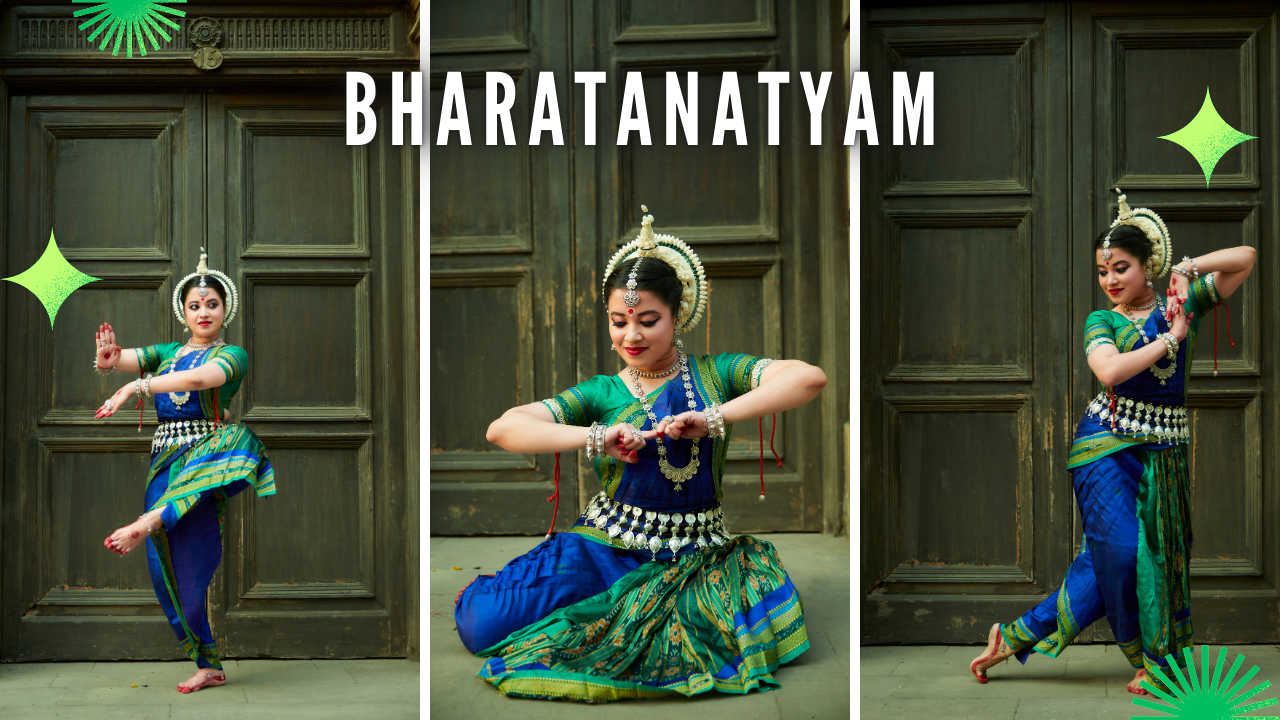
India is home to a variety of classical dance forms, each with its own unique style, history, and cultural significance. These dances have been passed down through generations and often embody themes from ancient epics, mythology, and spirituality. Here’s an educational overview of India’s classical dance forms, covering their origins, key elements, and characteristics.
1. Bharatanatyam (Tamil Nadu)
Introduction
Bharatanatyam is one of the oldest classical dance forms of India. It has a history of more than 2000 years, which makes it very important for culture-related questions in UPSC exams.
It originated in Tamil Nadu in South India. This region is known for its rich temple culture and classical arts.
It is not just dance, but a combination of multiple elements:
Body movements (dance)
Music
Facial expressions
Storytelling
It is deeply connected with religion and spirituality. Earlier, it was performed mainly to worship gods in temples, not for entertainment.
Origin and Historical Background
Temple Tradition (Very Important)
Bharatanatyam started as a temple dance. It was performed inside temples as part of religious rituals.
It was performed by devadasis (temple dancers).
Devadasis were women who were dedicated to the service of God.
They were trained in dance and music from a young age.
Their performances were considered a form of devotion (bhakti).
Purpose of dance:
To please the deity
To express devotion through art
Earlier Names
Bharatanatyam was earlier known as:
Sadir
Dasi Attam
Important point: UPSC sometimes asks about old names of classical dances.
Decline and Revival (Modern Period)
During the British period, Bharatanatyam faced decline because:
The Devadasi system was criticised
Dance was wrongly seen as immoral
Revival Phase (Very Important for Exams):
In the 20th century, reformers revived this art
The most important figure was Rukmini Devi Arundale
Her contribution:
Removed social stigma
Brought Bharatanatyam from temples to the modern stage
Made it acceptable among an educated society
Result: Bharatanatyam became the first classical dance to gain global recognition
Theoretical Base (Foundation of Dance)
Bharatanatyam is based on Natyashastra
This text was written by Bharata Muni
What is Natyashastra?
It is an ancient Sanskrit text on performing arts
It explains:
How to dance
How to express emotions
How to perform on stage
Key concept from Natyashastra:
Rasa (emotion experienced by the audience)
Bhava (emotion expressed by the dancer)
Exam Tip: Natyashastra is the base of almost all Indian classical dances
Contribution of Tanjore Quartet
In the 19th century, four brothers known as the Tanjore Quartet played a key role.
Who were they?
Ponniah, Chinnaiah, Sivanandam and Vadivelu
Their Contributions (Very Important)
Standardised the dance format
Created the modern performance sequence (Margam)
Composed many dance pieces and music
Without them, Bharatanatyam would not have a fixed structure today
Basic Components of Bharatanatyam
(a) Nritta (Pure Dance)
Meaning: Dance without any story or emotion
Focus is only on:
Rhythm
Footwork
Body movements
Example: Fast steps, patterns, symmetry
(b) Nritya (Expressive Dance)
Meaning: Dance with expression and storytelling
Includes:
Facial expressions
Hand gestures (mudras)
Purpose: To convey emotions like:
Love
Devotion
Anger
Joy
(c) Natya (Drama)
Meaning: Complete dramatic performance
Includes:
Characters
Story
Dialogue (through expression)
Themes and Philosophy
Main themes:
Bhakti (devotion to God)
Shringara (love, especially divine love)
Stories are taken from:
Ramayana
Mahabharata
Puranas
Common Deities Depicted
Lord Shiva (Nataraja – god of dance)
Lord Krishna
Goddess Durga / Devi
Music and Instruments
Bharatanatyam is always performed with music. The dance and music are closely connected, which means the dancer’s movements follow the rhythm and meaning of the music.
It is based on Carnatic Music, which is the classical music tradition of South India. Carnatic music is known for:
Complex rhythms (tala)
Melodic patterns (raga)
Devotional compositions
Important Understanding: In Bharatanatyam, the dancer does not dance randomly. Every movement is synchronised with music, rhythm, and lyrics.
Main Components of Musical Accompaniment
(A) Vocalist (Singer)
The vocalist is the person who sings during the performance.
Songs are usually in:
Tamil
Telugu
Sanskrit
Role of the vocalist:
Provides the lyrics (words of the song)
Creates the emotional mood of the performance
Helps the dancer express bhakti (devotion), love, or other emotions
Why important?
The dancer’s expressions (abhinaya) depend heavily on the meaning of the song.
Without the singer, storytelling becomes difficult.
(B) Mridangam (Very Important)
Mridangam is the main rhythm instrument in Bharatanatyam.
It is a two-sided drum:
Played with both hands
Produces different types of sounds
Role of Mridangam:
Maintains the tala (rhythm cycle)
Controls the speed and timing of the dance
Matches the dancer’s footwork
Important Point:
The dancer’s foot movements and the mridangam beats must be perfectly synchronised.
Any mismatch can disturb the performance.
(C) Melodic Instruments
These instruments provide the tune and musical background.
1. Flute
Produces a soft and flowing sound
Used to create an emotional and devotional atmosphere
2. Veena
A traditional South Indian string instrument
Associated with the goddess Saraswati
Produces a deep and classical sound
3. Violin
Adapted into Indian classical music
Supports the singer by:
Following the melody
Filling musical gaps
(D) Nattuvanar (Most Important Role)
The Nattuvanar is the conductor of the Bharatanatyam performance.
Usually:
Guru (teacher) of the dancer
Sits on the stage side
Functions of Nattuvanar
Recites rhythmic syllables (called bols or sollukattu) Example: tai ya tai, dhi dhi tai
Plays cymbals (small metal instruments)
Keeps the beat
Guides the dancer’s steps
Controls the entire performance
Coordinates:
Singer
Mridangam player
Dancer
Costume and Make-up
Costume
Bright silk saree with fan-shaped pleats
When a dancer bends, it opens like a fan
Helps the audience see leg movements clearly
Jewellery
Heavy traditional jewellery:
Head
Neck
Arms
Waist
Make-up
Eyes are highlighted using kohl
Hands and feet are decorated with red colour
This makes expressions visible even from a distance
Important Personalities
Rukmini Devi Arundale
Revived Bharatanatyam
Brought it to the modern stage
Balasaraswati
Famous for expressive storytelling (abhinaya)
Padma Subrahmanyam
Researched ancient dance traditions
2. Kathak (North India)
Kathak is one of the prominent classical dance forms of India, known for its expressive storytelling, intricate footwork, and rhythmic patterns. Originating in northern India, Kathak has evolved over centuries, blending elements from different cultures and traditions, making it a rich and diverse dance form.
Origins and Evolution
Historical Roots: Kathak is thought to be linked to the Kathakaras or storytellers, who narrated epics like the Ramayana and Mahabharata and other ancient scriptures. Through expressive gestures, they conveyed stories to lay audiences.
Courtly Influence: Kathak underwent a significant transformation in the medieval period, particularly under Mughal patronage, where it was adapted for the royal court and enriched with Persian and Islamic cultural elements.
Centres of Kathak: By the 19th century, Lucknow, Jaipur, and Raigarh became major hubs, each developing its own distinctive style within the Kathak tradition.
Modern Revival: In the 20th century, Kathak began to receive public support, and large group choreographies became more common, enriching the dance with contemporary adaptations.
Characteristics of Kathak
Footwork (Tatkar): Known for its precise and rapid footwork, Kathak dancers perform intricate rhythms, emphasising timing and agility.
Pirouettes (Chakkars): Kathak dancers execute multiple spins or pirouettes, adding to the dynamic visual impact of the performance.
Expressive Storytelling: Kathak incorporates both abstract (Nritta) and expressive (Nritya) dance, narrating stories through movements, facial expressions, and gestures.
Structure of a Kathak Performance
A Kathak recital is structured with specific sequences:
Amad: The opening sequence introduces the rhythmic style.
Thaat: A slow, graceful section setting the tone for the performance.
Gat Nikas: Movements depicting characters or stories, allowing the dancer to explore narrative expression.
Paran: A rhythmic piece, often performed in sync with tabla beats.
Tatkar: Rhythmic footwork, one of Kathak’s defining features.
Music and Instruments
Thumri: Kathak performances often include Thumri, a style of Hindustani music associated with romantic and expressive lyrics, especially favoured in the Lucknow court of Wajid Ali Shah. Thumri enhances the emotional depth of Kathak.
Musical Instruments: Kathak is accompanied by Tabla (a pair of drums), Pakhawaj (a two-headed drum), and Sarangi (a bowed string instrument). The Sitar and other plucked instruments are also used to add melodic texture.
Unique Aspects of Kathak
A blend of Cultures: Kathak’s evolution under both Hindu and Islamic influence makes it a unique blend of spirituality, storytelling, and royal elegance.
Versatile Themes: While rooted in Krishna lore and devotional themes, modern Kathak explores a variety of themes and stories, broadening its appeal.
Dynamic Rhythm-Play: Kathak is known for its intricate rhythmic patterns and the dancer’s ability to play with tempo and beats, making it a dance of rhythm and precision.
3. Odissi (Odisha)
Odissi is one of India’s most graceful classical dances, originating from Odisha in eastern India. Its roots lie in temple traditions where it was performed by maharis (female temple dancers) as a ritual offering to the deities. Over time, Odissi has evolved into a sophisticated and expressive performance art.
Origins and Evolution
Temple Tradition: Originally performed by maharis as part of temple worship, particularly in Jagannath temples in Odisha.
Remodelling as Theatre Art: In the mid-20th century, Odissi was reshaped into a performance art form, using ancient sculptures, paintings, and literary references from Odisha’s cultural heritage.
Spiritual Foundation
Vaishnavism Influence: Odissi is deeply influenced by Vaishnavism, the worship of Vishnu. Stories of Krishna and Radha form the central themes of its performances.
Poetic Inspiration:
The lyrics of Jayadeva’s Gitagovindam (12th-century work) hold an esteemed place in Odissi dance.
Songs in Oriya by poets like Upendra Bhanja and Banamali Das are also part of the Odissi repertoire.
Style and Technique
Graceful and Sculpturesque Movements: Odissi movements are inspired by ancient temple sculptures and are often described as graceful and sculpturesque.
Characteristic Poses:
Tribhangi: A graceful, three-bend posture that gives Odissi its distinct serpentine quality.
Chowk: A firm, square stance that represents stability and strength.
Elements of Technique:
Hastas: Codified hand gestures used to convey stories and emotions.
Pada Bheda: A structured approach to footwork.
Chalis: Gaits and walks that are unique to Odissi.
Bhramaris: Spins and circular movements.
Musical Accompaniment
Traditional Instruments: Odissi is accompanied by the Pakhawaj (a two-headed drum), flute, and sitar, creating a distinct rhythmic and melodic environment.
Role of Dance Conductor: A conductor, or nattuvanar, coordinates the performance, keeping time with cymbals and chanting rhythmic syllables.
Key Features of Odissi Dance
Flowing Movements: Odissi is known for its soft, fluid motions, creating a harmonious blend of grace and poise.
Narrative Dance: Odissi uses expressive storytelling through body language, hand gestures, and facial expressions.
Classical Heritage: By drawing on ancient traditions, sculptures, and texts, Odissi maintains a deep connection with Odisha’s cultural and spiritual heritage.
4. Kathakali (Kerala)
Kathakali, meaning “story play,” is one of India’s classical dance forms, originating in Kerala in the 17th century. It is renowned for its vibrant make-up, elaborate costumes, and detailed storytelling through expression and gesture. Here is an in-depth look at Kathakali. Origins and Development
Historical Roots: Developed in Kerala in the 1600s under the patronage of a local prince who wrote Malayalam-language plays based on epic stories from the Ramayana.
Epic Inspirations: Stories in Kathakali mainly come from the Ramayana and Mahabharata, as well as other Puranic tales.
Unique Characterization
Symbolic Makeup and Costume: Kathakali categorises characters with unique makeup and costumes to symbolise their personalities.
Green Face Paint: Used for heroes, kings, and divine characters.
Red and Black: Represent villains or fierce characters.
Costume Features: The main costume element is the large, billowing skirt for male characters, along with elaborate headdresses.
The Performance
Speechless Acting: Kathakali is performed without spoken dialogue.
Singers: Two singers on stage sing the dialogue, keeping rhythm with gong and cymbals.
Drummers: Two drummers accompany the performance on the Chenda drum.
Expressive Gestures: The story is conveyed through detailed facial expressions and hand gestures.
Traditional Structure
Evening to Daybreak Performances: Traditional Kathakali performances are long and often begin in the evening with invocatory drumming on the Maddalam.
Modern Adaptations: Today, shorter scenes from different plays are commonly performed instead of a single all-night play.
Key Elements of Kathakali
Mudras: Hand gestures used to communicate emotions and actions.
Expressions: Actors undergo rigorous training to control every muscle in their faces, enhancing their ability to portray various emotions.
Vibrant Aesthetics: Costumes and make-up are elaborate, making Kathakali one of the most visually distinctive classical dances of India.
5. Kuchipudi (Andhra Pradesh)
Kuchipudi, a major classical dance form of India, originated from Andhra Pradesh and developed as a result of the Bhakti movement starting in the 7th century AD. It blends dance, drama, and music into a comprehensive art form that captures both the devotion and grace of Indian classical performance.
Origins and History
Place of Origin: Kuchipudi derives its name from Kuchelapuram, a village in Andhra Pradesh where the art form was refined and nurtured by scholars and artists.
Influence of the Bhakti Movement: The dance form grew under the influence of the Bhakti (devotional) movement, expressing themes of devotion to deities and episodes from Hindu mythology.
Structure and Components
Kuchipudi consists of three main elements: Nritta (pure dance), Nritya (expressive dance), and Natya (dramatic dance).
Nritta:
Focuses on rhythmic movements that are decorative but have no symbolic meaning.
Teermanams and Jatis are intricate patterns of movement that fall under Nritta.
Nritya:
Encompasses Sabdams, which involve expressive gestures and storytelling.
Combines Abhinaya (expressive gestures and mime) with the rhythmic dance.
Natya:
This part emphasises drama and acting using Mudras (hand gestures) and facial expressions to convey the story’s emotions.
Performance Style and Unique Features
Dance-Drama Tradition: Historically, Kuchipudi was performed as a dance-drama with multiple dancers playing different roles. Today, it can also be performed as solo, duet, or group presentations.
Expression of Multiplicity: The dancer portrays multiple characters on stage by swiftly changing expressions and gestures, relying on both naturalistic acting and symbolic gestures.
Dynamic Movements: Emphasis is placed on fluid transitions and dramatic expression, showcasing intense feelings and devotion.
Music and Accompaniment
Carnatic Music: The dance is set to Carnatic music, the classical music of southern India.
Instruments: Traditional instruments like the Mridangam (drum), Veena (string instrument), flute, and violin typically accompany the performance.
Themes and Stories
Mythological Narratives: Kuchipudi often narrates episodes from Hindu epics like the Ramayana and Mahabharata.
Devotional Themes: Stories focusing on the lives of Hindu deities, especially Krishna and Shiva, are common.
6. Manipuri (Manipur)
Manipuri dance is a graceful classical dance form that originated in Manipur, a northeastern state of India. It is distinct for its gentle movements, spiritual themes, and unique style that contrasts with other Indian classical dance forms. This dance form is primarily performed in temples and other sacred spaces, reflecting its deep-rooted connection to the Vaishnava faith.
Origins and Influences
Cultural Roots: Manipuri dance developed among the Meiteis (people of the Manipur valley) and is deeply influenced by the Vaishnava tradition, focusing on devotion to Lord Krishna and Radha.
Temple Performances: Even today, temples in Manipur are primary venues for performances, maintaining the dance’s sacred essence.
Themes: The dance is predominantly devotional, often drawing on stories from the life of Krishna and episodes of Radha-Krishna love lore.
Characteristics of Manipuri Dance
Introverted Style: Manipuri dance is unique in its restraint and inward focus. The dancers do not make eye contact with the audience, emphasising a more meditative and internalised expression.
Circular Movements: Movements are soft, circular, and continuous, merging seamlessly to create an unbroken flow.
Subtle Expressions: Facial expressions are gentle and never exaggerated, in contrast to the dramatic expressions seen in some other Indian classical dances.
Mudras: Hand gestures, or mudras, are used minimally and subtly, blending into the flow of the dance.
Key Forms Within Manipuri Dance
Jagoi: A gentle and graceful dance, embodying the Lasya (feminine and soft) element. This style is often seen in Ras Leela performances, which depict the divine love story of Radha and Krishna.
Cholom: A more vigorous style of dance that represents the Tandava (masculine and strong) element. Despite its energy, Cholom maintains the restraint and elegance typical of Manipuri dance.
Ras Leela: A signature form of Manipuri dance, Ras Leela focuses on devotion to Krishna and celebrates episodes from his life, especially his interactions with Radha and the gopis (milkmaids).
Technique and Movement
Posture and Footwork: The dancer’s legs are bent with knees close together, allowing soft, light steps that give a floating effect. Unlike other Indian dances, Manipuri dancers avoid audible footwork, keeping their movements soft and silent.
Flowing Movements: Each movement flows naturally into the next, creating a harmonious, circular rhythm.
Music and Instruments
Pung: The Pung, a traditional Manipuri drum, plays a vital role in setting the rhythm and energy for the dance. Pung Cholom, a dance performed with the drum, showcases both musical and physical skills.
Flute: The flute is another primary instrument, adding a soothing, melodious quality that enhances the devotional atmosphere of the performance.
Unique Features
Introverted Approach: Dancers focus on the internal experience, often meditating through their movements.
Symbolism and Spirituality: Every gesture and movement has a spiritual symbolism, aiming to create a sense of devotion and divine connection.
Silent Footwork: Unlike many Indian dance forms, Manipuri dance has silent footwork, emphasising the smooth, floating quality of movement.
7. Mohiniyattam (Kerala)
Mohiniattam, meaning “dance of the enchantress,” is a classical dance form originating from Kerala. Known for its grace and femininity, Mohiniattam combines delicate movements with gentle rhythms, making it one of India’s unique dance traditions. Below is a detailed look at Mohiniattam’s origins, characteristics, and performance elements.
Origins and Development
Mythological Inspiration: The name “Mohiniattam” is derived from Mohini, the mythological enchantress, symbolising feminine grace and beauty.
Temple Tradition: The dance evolved from temple performances in Kerala, rooted in devotion and spirituality.
Royal Patronage: Swati Tirunal, the 19th-century prince of Travancore, greatly contributed to the development of Mohiniattam. He composed a vast repertoire of songs specifically for the dance, which are still used today.
Key Features and Style
Gentle and Feminine: Mohiniattam is characterised by soft, flowing movements and gentle footwork. There is no heavy or forceful stepping, and movements are primarily focused on the torso.
Graceful Flow: The dancer’s body rises and falls with a natural grace, embodying a sense of lightness and restraint.
Restrained Movements: Unlike many other classical forms, Mohiniattam’s movements are subtle and refined, creating an enchanting visual aesthetic.
Musical Accompaniment and Instruments
Unique Rhythms: Mohiniattam uses Kerala-specific rhythms, particularly those associated with traditional drums.
Primary Percussion: The Maddalam and Edakka drums provide the rhythm, especially with syllables that complement the feminine essence of the dance.
Melodic Instruments: Mohiniattam’s music ensemble includes:
Mridangam (drum)
Veena (string instrument)
Flute
Kuzhitalam or Cymbals
Movement and Expression
Torso Movements: Emphasis is placed on the torso, which moves fluidly to convey grace and femininity.
Melody and Motion Harmony: The oscillations of the music match the dancer’s movements, creating a seamless blend of rhythm and motion.
Emotional Nuance: Expressions are gentle, with a focus on subtlety rather than dramatic display.
8. Sattriya (Assam)
Sattriya dance, a classical Indian dance form, originated in the Sattras (monasteries) of Assam in the 16th century. Founded as a medium to spread Vaishnava philosophy by the saint and reformer Shankaradeva (1449-1586), it centres around devotion to Lord Krishna. Over time, Sattriya has evolved from a monastic tradition into a prominent classical dance, performed both in traditional monasteries and on modern stages.
Origins and Historical Background
Rooted in Vaishnavism: Originating from the Vaishnava movement, Sattriya was created by Shankaradeva to promote devotion to Krishna and other aspects of Vaishnavism.
Institutional Beginnings: Initially performed by monks in Sattras, Sattriya maintained a religious and monastic character for centuries before it moved into the public domain in the late 20th century.
Key Features of Sattriya Dance
Sattriya dance incorporates Nritta (pure dance) and Abhinaya (expressive dance), and is known for its elegance and spiritual depth.
Hand Gestures and Expressions:
Hasta (Hand Gestures) and Pada Karma (Footwork) form the technical foundation.
Dancers convey emotions and narratives through detailed facial expressions and graceful movements.
Distinctive Movements and Structure:
Nritta (pure dance) includes rhythmic footwork and dynamic movements.
Abhinaya (expression) is used for storytelling, portraying characters from the Hindu epics.
Structure of a Sattriya Performance
A traditional Sattriya performance may include a variety of sections, each with distinct purposes and characteristics:
Invocation: The performance begins with a prayer or invocation to Krishna or Rama.
Sutradhar Dance: The conductor (sutradhar) introduces the themes and mood.
Ramdani, Chali, Mela Nach, and Jhumura: These dances are often purely rhythmic, showcasing intricate footwork and movements.
Geetar Nach: This expressive dance focuses on storytelling through abhinaya, portraying scenes from Vaishnava texts.
Musical Accompaniment and Instruments
Gayan Bayan: A traditional musical prelude performed by a group of musicians playing drums.
Instruments: Accompanied by khol (drums), cymbals, and sometimes flutes and string instruments.
Rhythmic and Melodic Complexity: The music is rich and varied, often enhancing the emotional depth of the performance.
Modern Adaptations and Innovations
Stage Adaptations: Today, Sattriya is not only performed in Sattras but also on concert stages as solo, duet, or group performances.
New Choreography: While respecting the traditional repertoire, new choreographies are created to enhance the dance’s appeal to contemporary audiences.
Dance Dramas: Inspired by traditional Sattriya stories, modern dance dramas recreate narratives from the epics and Vaishnava lore.
Common Features of Indian Classical Dances
Use of Mudras: Each dance form has a set of hand gestures (mudras) that symbolise different ideas, emotions, and objects.
Expression and Emotion: Dancers use facial expressions and eye movements to convey emotions and tell stories.
Rhythmic Footwork: Each form has unique footwork patterns and rhythmic variations, often accompanied by ankle bells (ghungroos).
Spiritual and Cultural Significance: Many dances are rooted in devotion, telling stories of gods, goddesses, and spiritual values.
Themes: Hindu epics, Persian & Mughal influences Features: Fast spins, intricate footwork, expressive storytelling Famous Artists: Birju Maharaj, Sitara Devi
Odissi (Odisha)
Themes: Lord Jagannath, Krishna-Radha tales Features: Graceful movements, “Tribhangi” posture, fluid hand gestures Famous Artists: Kelucharan Mohapatra, Sonal Mansingh
Kathakali (Kerala)
Themes: Hindu epics, good vs evil Features: Elaborate costumes, face makeup, exaggerated expressions, eye movements Famous Artists: Kalamandalam Gopi, Kottakkal Sivaraman
Kuchipudi (Andhra Pradesh)
Themes: Hindu mythology, Krishna tales Features: Rhythmic footwork, theatrical storytelling with speech & acting Famous Artists: Vempati Chinna Satyam, Raja-Radha Reddy
Manipuri (Manipur)
Themes: Life of Krishna & Radha Features: Gentle, flowing movements, devotional Ras Lila style Famous Artists: Guru Bipin Singh, Darshana Jhaveri
Mohiniyattam (Kerala)
Themes: Tales of Vishnu as Mohini Features: Slow, swaying movements, feminine grace, subtle expressions Famous Artists: Kalamandalam Kalyanikutty Amma, Sunanda Nair
Sattriya (Assam)
Themes: Devotion to Lord Krishna Features: Dance-drama style, rhythmic footwork, controlled expressions Famous Artists: Dr. Bhabananda Barbayan, Anita Sharma
General Studies
About Us
General Studies is an online learning platform for UPSC and State PSC aspirants across India. It focuses on building strong conceptual understanding and exam-oriented preparation.
We provide comprehensive General Studies courses for Prelims and Mains. The content includes structured notes, PYQ analysis, MCQs and current affairs, which are designed by experienced educators and aligned with the latest exam patterns.
 Launch your Graphy